The Sabbath Economy: What Happens When a Whole Society Rests Together
When the ancient Israelites kept Sabbath, debt was forgiven and the land breathed. The radical economic vision embedded in the Sabbath laws of Leviticus.
Key Takeaways
• The Sabbath laws were social, economic, and ecological structures, not merely private spiritual practices.
• Weekly Sabbath leveled economic hierarchy by requiring rest for servants, immigrants, and animals as well as owners.
• The sabbatical year built debt forgiveness into the economy as a recurring structural reset.
• Jubilee interrupted permanent land concentration and hereditary inequality by returning land to original families.
• The land itself was given rest, joining human dignity, economic justice, and ecological limits in one rhythm.
The Sabbath is often understood as a personal spiritual practice — a private arrangement between an individual and God, or between an individual and their own need for restoration. This understanding is not wrong. But it is dramatically incomplete. The Sabbath, as presented in the Hebrew scriptures, is not primarily a personal practice. It is a social, economic, and ecological structure — a set of interlocking practices designed to prevent the accumulation of the specific pathologies that human societies, left unchecked, reliably produce.
To read the Sabbath laws of Exodus, Leviticus, and Deuteronomy is to encounter something that looks less like a religious observance and more like a political economy — a systematic challenge to every concentration of power, every mechanism of debt bondage, every tendency of the productive to consume the vulnerable and the strong to devour the weak. The Sabbath is radical not despite being ancient. It is radical because it is ancient, because it recognized, three thousand years ago, what we are still struggling to address today.
The Weekly Sabbath: Rest as Equality
The fourth commandment in Exodus is, by any measure, a remarkable political document. "Remember the Sabbath day, to keep it holy. Six days you shall labor and do all your work, but the seventh day is a Sabbath to the Lord your God. On it you shall not do any work, you, or your son, or your daughter, your male servant, or your female servant, or your livestock, or the sojourner who is within your gates."
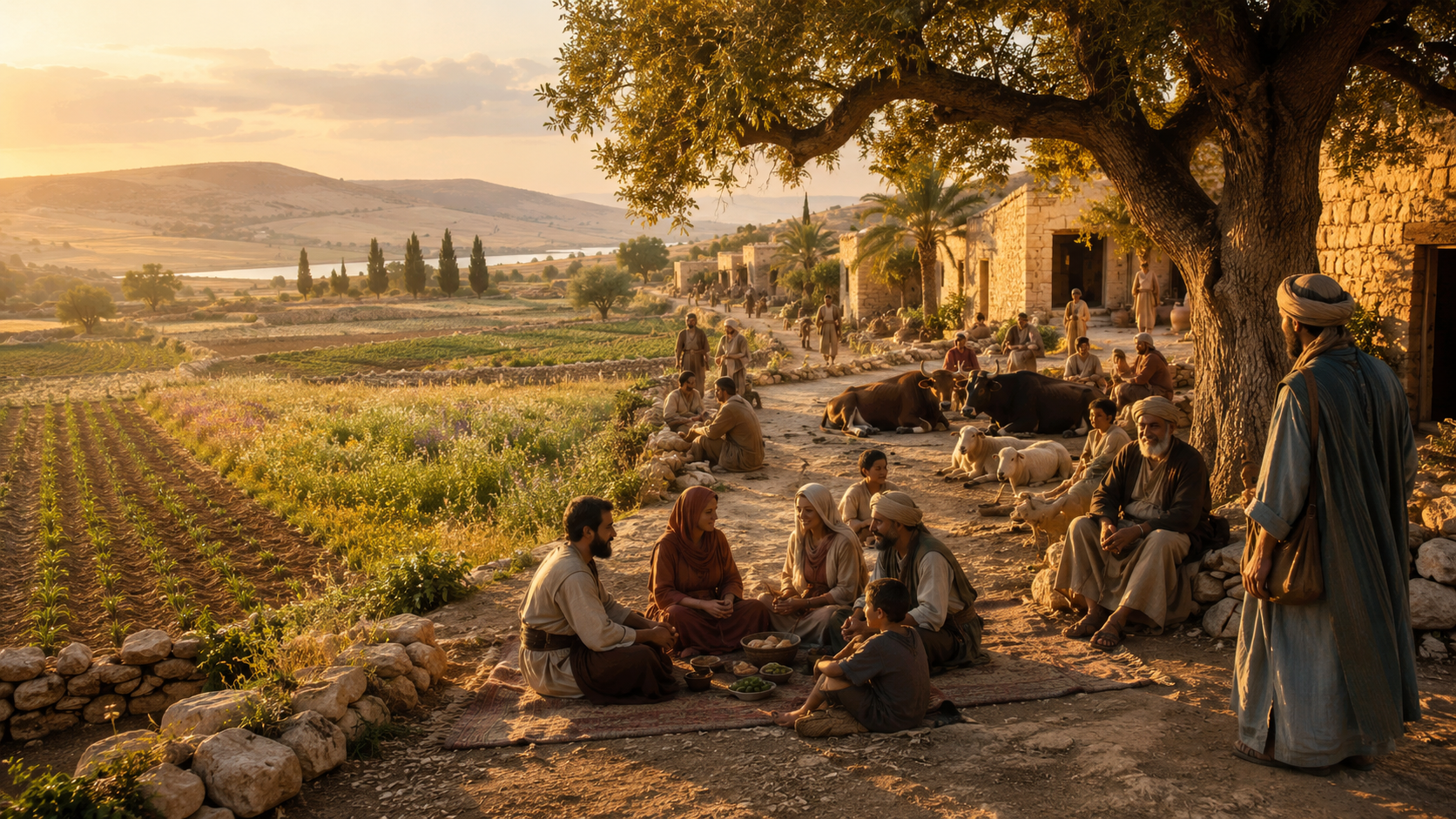
Notice who is included in this rest mandate: servants (the ancient equivalent of employees), the stranger in the land (immigrants, resident aliens), and even animals. The Sabbath command does not permit the powerful to rest while the vulnerable continue to work. It is explicitly, structurally egalitarian. On the seventh day, the economic hierarchy is leveled. The slave and the owner cannot work. The citizens and the immigrants cannot work. Even the ox and the donkey rest.
This is not mere idealism. In any society organized around the productivity of some people for the benefit of others, the most reliable mechanism of exploitation is the elimination of rest. The enslaved cannot rest. The impoverished cannot rest. Those who hold power over others rest, while those who do not hold power work. The Sabbath command is a direct structural challenge to this logic: no one may deprive another person of rest. Not even your servants. Not even your livestock. Not even the foreigner who has no legal standing.
The Sabbatical Year: Debt Forgiveness as Rhythm
Every seventh year, the Sabbath logic was expanded from the weekly to the annual. Deuteronomy 15 describes what was called the shemitah — the sabbatical year, or year of release. "At the end of every seven years you shall grant a release. And this is the manner of the release: every creditor shall release what he has lent to his neighbor. He shall not exact it of his neighbor, his brother, because the Lord's release has been proclaimed."
Every seven years, debts were to be cancelled. Not restructured. Not refinanced. Cancelled. The accumulated debt that was, in the ancient world as in the modern one, the primary mechanism by which the economically vulnerable became permanently subservient to the economically powerful — that debt was to be cleared every seven years, by fiat, regardless of how it had accumulated.
The economic logic of compound debt is as old as human civilization: those with less are charged more for access to capital; those charges accumulate faster than the capacity to repay them; and the result, over time, is a permanently indebted underclass that works in effective servitude to a creditor class. The sabbatical year was a structural prevention of this dynamic. Not charity. Not voluntarism. A built-in reset, every seven years, whether the creditors were ready for it or not.
The Jubilee: The Most Radical Reset of All
The Jubilee, described in Leviticus 25, extended the sabbatical logic one step further. After seven times seven years — in the fiftieth year — not only were debts cancelled, but land was returned to its original families. "You shall consecrate the fiftieth year, and proclaim liberty throughout the land to all its inhabitants."
The economic significance of this is almost impossible to overstate. In an agricultural society, land is the primary means of production. The concentration of land in the hands of the few — through purchase, debt, inheritance, and conquest — is the primary mechanism by which economic inequality becomes permanent and hereditary. The Jubilee interrupted this concentration at the root: every fifty years, land reverted to its original tribal allocation. No family could permanently dispossess another. No dynasty could accumulate unlimited land across generations. The economic playing field was reset, by design, every half-century.
Whether the Jubilee was ever literally practiced as described is historically debated. But its proclamation — its existence as an ideal embedded in the law code of this particular people — represents something extraordinary: the recognition that economic systems, left without structural correction, reliably produce concentrations of wealth and power that become incompatible with the dignity and flourishing of all their members. The Sabbath economy is, at its root, a system designed to prevent that outcome.
The Land That Rests
The Sabbath also applied to the land itself. Every seventh year, agricultural land was to lie fallow — unplanted, unworked, allowed to rest. Anything that grew of its own accord could be gathered by anyone — by the poor, by the foreigner, by the animals. The land's rest was also the poor's provision.
This was not only ecologically wise, though it was that — soil that rests recovers its fertility in ways that continuous cultivation depletes. It was also a theological statement about the ownership of land: the earth is not ultimately ours. We are its stewards, not its owners, and our use of it must honor its own need for rest and recovery.
The environmental crisis of the twenty-first century is, in one reading, what happens when societies forget that the land also has a Sabbath — when the logic of maximum extraction overrides every other consideration. The Levitical Sabbath economy was, three thousand years before the industrial revolution, an argument that productive systems have natural limits, and that ignoring those limits eventually destroys both the system and the people who depend on it.
What This Means for Us
We do not live in ancient Israel. The specific mechanisms of the Sabbath economy — weekly rest for servants, shemitah, Jubilee — do not map directly onto contemporary economic policy. But the principles they embody are as relevant as they have ever been.
The principle that everyone — including the most economically vulnerable — has a right to rest. The principle that debt accumulation mechanisms require structural correction to prevent permanent subjugation. The principle that the productive capacity of both people and land has limits that must be honored. The principle that economic systems require built-in resets, or they will inevitably concentrate their benefits and distribute their costs in ways that become incompatible with human dignity.
These are not merely ancient religious ideals. They are the unfinished political and economic agenda of anyone who takes seriously the question of what it would mean for all people to have the rest that the Sabbath declares to be their right.
Challenge: Trace One Supply Chain of Rest
Pick one convenience you regularly rely on (overnight delivery, a 24-hour service, weekend gig-driven errands) and spend fifteen minutes researching who is working to provide it and under what conditions.
Write a short paragraph connecting what you learn to the article's claim that the Sabbath was designed to protect servants, foreigners, and animals — the most vulnerable, not just the comfortable.
Choose one small, concrete adjustment to how you use that convenience this week (a different order time, a tip, a different choice) as a single act of attention to the principle.
Reflection Question
What did you learn about who bears the rest deficit behind your convenience?
