Rest Through the Body: Physical Recovery When You're a Married Parent
A Rest Profile for the Physically Active Soul — Married with Children
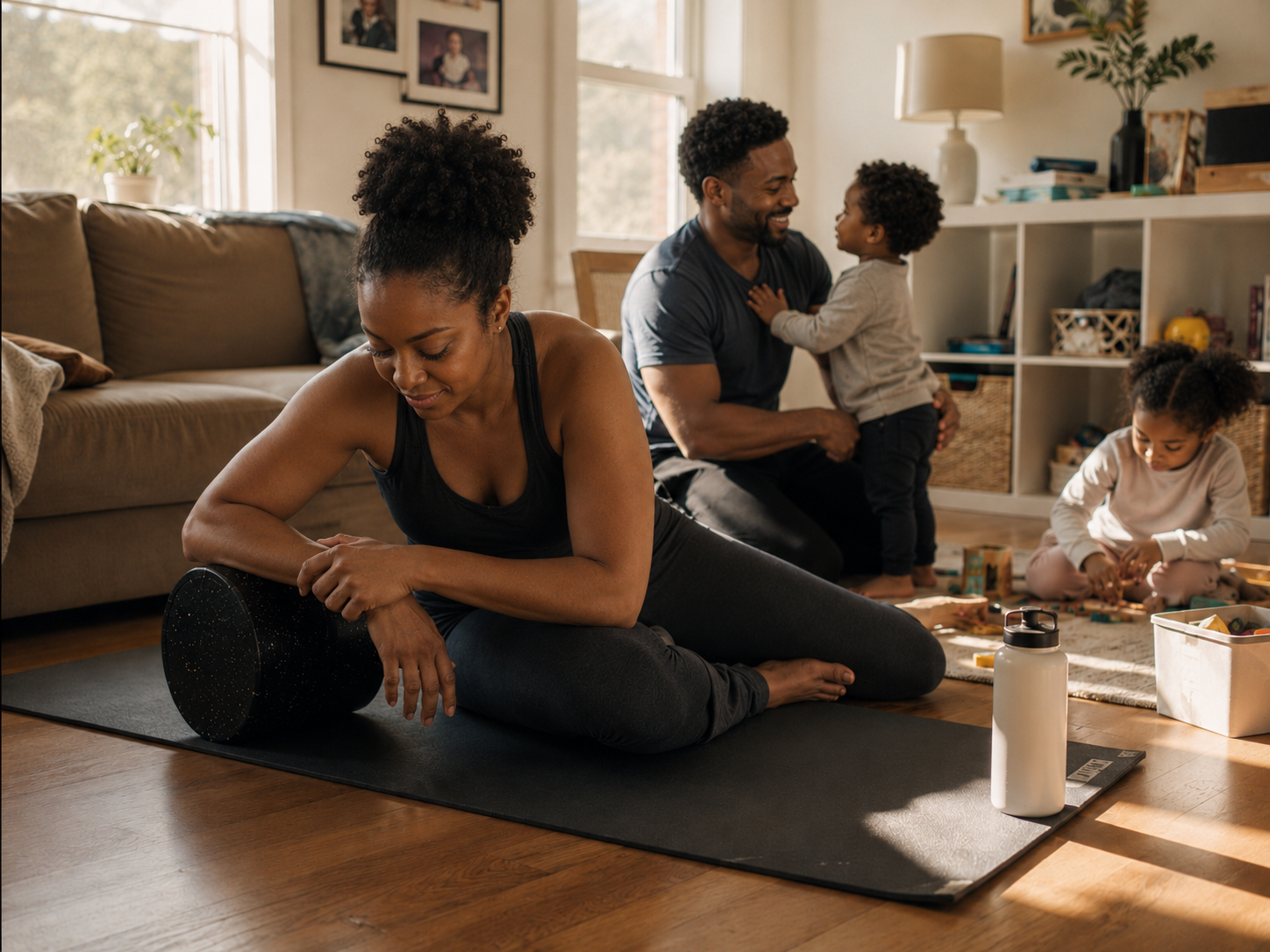
Key Takeaways
Parenting is physically demanding, even when that strain goes unnamed.
Sleep disruption, constant vigilance, lifting, carrying, and compressed recovery time can leave a parent’s body chronically depleted.Physical rest must change with each stage of parenting.
Early parenthood may require lowered expectations and basic recovery, while later stages create more room for consistent movement, shared activity, and structured care.Recovery needs clear support and structure within the marriage.
Protected sleep, scheduled movement, shared childcare coverage, and honest communication help both partners care for their bodies without turning rest into competition.Caring for the parent’s body strengthens the whole family.
Rest, restorative movement, co-regulation, and physical ease help parents remain present, patient, and capable across every stage of family life.
Parenting is one of the most physically demanding experiences available to human beings, and it is almost never described that way. The literature focuses on the emotional demands, the financial demands, the relational demands. But the body knows what the books don't always say: the lifting and carrying of infants and toddlers, the sleep deprivation that can last years, the physical vigilance of never quite switching off, the chronic low-grade tension of a body that has been on alert for so long it has forgotten what ease feels like.
For the person whose primary rest profile is physical — who knows their body well, who understands the difference between the satisfied ache of good physical exertion and the dull weight of a body that hasn't been properly cared for — parenting introduces a specific and significant challenge. The body that needs regular movement, quality sleep, intentional recovery, and physical self-care is living inside a life that systematically threatens all of these. The sleep is disrupted. The training schedule is subject to override without notice. The food is often whatever can be managed around the family's needs. The recovery time is colonized by the next thing the household requires.
Understanding this honestly — not to despair, but to design a realistic and genuinely restorative response — is the first act of physical self-care available to the parent.
The Variable of Children: How Age Reshapes Physical Rest
Infants and toddlers (0-3): Physical rest in this stage is defined by sleep deprivation, which is both the most significant physical challenge of early parenting and the one most resistant to management. No training protocol, no nutrition strategy, and no recovery tool compensates adequately for sustained disrupted sleep. The physically-oriented parent in this stage needs to lower their performance expectations significantly, prioritize sleep over training whenever there's a choice, and focus physical self-care on the basics: movement in whatever form is achievable, nutrition that is genuinely nourishing, and the co-regulation available through physical contact with an infant that is, paradoxically, one of the most physically calming experiences available.
Preschool years (3-6): Sleep begins to improve. The physically-oriented parent starts to reclaim some training consistency, though the schedule remains fragile. Children this age are physically active in ways that can be incorporated into the parent's movement life — bike rides, park visits, active play — rather than being purely interruption.
Middle childhood (6-12): The most physically manageable parenting season for the active parent. Children's school schedules create predictable windows for physical practice. Children's own activities — sport, dance, physical recreation — provide natural opportunities for shared physical engagement. Sleep is typically reasonably consistent. The physically-oriented parent in this stage has genuine, if still limited, access to a real training and recovery life.
Teenagers (13-18): Ironically complex. Teenagers' own physical activity often becomes more demanding — competitive sport, serious dance or martial arts — which can reintroduce scheduling demands. Late social schedules can disrupt parental sleep. But teenagers can also become genuine physical companions: the parent who can train, hike, or play sport alongside their teenager is both meeting their own physical rest needs and building one of the most important relational connections available in this demanding developmental stage.
The Benefits and Challenges of Physical Rest with Different Profiles
When Your Spouse Shares Your Physical Orientation
Two physically-oriented parents in a household with children have a significant structural advantage: they speak the same language about physical needs, they share the understanding of why movement matters, and they can coordinate coverage of children's needs around each other's physical practice with genuine mutual comprehension.
The challenges are logistical rather than relational. Two people who both need regular movement and structured recovery time, in a household where children's needs are constant, must coordinate coverage carefully. The solution that works best for most physically-oriented parenting couples is a pre-negotiated weekly schedule: Tuesday morning is yours, Thursday morning is mine; both protected, both non-negotiable, both facilitated by the other parent taking full household responsibility during those windows.
The risk in a same-profile physical parenting marriage is mutual enabling of overtraining — two people who both prize physical performance potentially pushing each other past recovery into depletion, while children's constant demands ensure that recovery time is already compressed. Supporting each other's rest days is as important as supporting each other's training days.
When Your Spouse Has a Different Rest Profile
The physically-oriented parent married to someone whose rest profile is intellectual, creative, or spiritual faces a specific translation challenge: their need for regular physical movement and structured recovery is real and has clear physiological consequences when unmet, but to a non-physical spouse it can look like a preference — something nice to have, but negotiable when the family's demands are pressing.
Making the need legible requires connecting it to visible outcomes. "When I haven't been able to run for more than ten days, I notice I'm more irritable with the children and less patient in our relationship. My sleep quality drops, my energy drops, and I'm less of the person I want to be. I need movement the way you need your reading time — it's not a preference, it's maintenance." This specificity is both true and persuasive to a spouse who cares about the relationship's quality.
The gifts a different-profile spouse offers are genuine and worth naming. The intellectually-oriented spouse who takes the children to a museum while the physical parent trains has created something valuable for both the children and the marriage. The creatively-oriented spouse who manages the household's sensory and aesthetic environment while the physical parent prioritizes sleep has contributed to family wellbeing in an important way. Different profiles, recognized and appreciated as complementary rather than competing, make the parenting household more complete.
Spring: Reestablishing Physical Rhythms After Winter
Spring is the body's natural season of reawakening, and for the physically-oriented parent who has experienced winter's compressed physical practice, it is the season of reclaiming movement with genuine joy.
Negotiate the spring physical schedule explicitly. As the season shifts and outdoor activity becomes more accessible, both parents' physical needs tend to increase — and if both people have been managing on reduced physical practice through winter, the competition for recovery time can escalate quickly. Have the explicit conversation in early spring: what does each person need physically this season? How is the family's schedule going to accommodate those needs? Who has what windows, and how are children's logistics shared to make both parents' physical practice possible?
Include children in age-appropriate physical activity. Spring's warmth invites this naturally. Bike rides, park visits, family walks, backyard play — these activities allow the physically-oriented parent to meet their movement needs while fulfilling their parenting role simultaneously. The quality of physical rest achieved this way is different from solo training, but it is real, and it builds children's own physical culture in ways that matter for their whole lives.
Prioritize sleep infrastructure in spring. As daylight extends in spring, sleep can be disrupted by light and shifting rhythms. For the physically-oriented parent whose recovery depends significantly on sleep quality, managing the spring light transition — blackout curtains, consistent bedtimes, protecting sleep windows from social and logistical encroachment — is a form of physical self-care that repays everything else.
Establish one protected solo training or recovery window per week. The specific form matters less than the consistency. A Saturday morning run, a Tuesday evening swim, a Wednesday yoga class. Pre-agreed with your spouse, protected from schedule creep, facilitated by clear coverage of children. One reliable, non-negotiable window per week sustains physical rest in a way that ad-hoc fragments cannot.
Summer: Physical Abundance Within Family Life
Summer is simultaneously the physical parent's richest season — warmth, outdoor activity, longer days — and the most logistically demanding, as children's school routines give way to more complex coverage arrangements.
Design a physical family summer. The summer that is organized around physical activity — a camping trip, a hiking week, daily swimming, a family sport that everyone can participate in at their level — is one of the most restorative summers available to the physically-oriented parent. It meets their own movement needs while creating a physical family culture that children carry into their own adult lives.
Use camp and activity time for genuine physical recovery. The weeks when children are at camp or consistently in structured activities are the physically-oriented parent's high season. Schedule the training you've been deferring. Book the massage. Sleep late without guilt. Take the long run that requires more time than school-day mornings allow. These windows are finite and precious; use them with genuine intentionality.
Prioritize the couple's physical connection. Summer's warmth and energy support physical intimacy and physical recreation together — the things that maintain the physical dimension of the marriage alongside the parenting demands that can crowd it out. A morning kayaking trip without children. An evening walk after bedtime. A weekend of camping as a couple while grandparents have the children. Physical togetherness in the marriage is both its own form of physical rest and one of the most important relational maintenance practices available.
Teach children about physical recovery. Children who see their physically-oriented parents take rest days, speak honestly about physical limits, and treat recovery as a legitimate and valued part of a physical life — rather than something to be minimized or apologized for — are learning something important about sustainable physical culture. The parent who models this teaches children a relationship with their bodies that will serve them far better than any specific sport or fitness outcome.
Autumn: Recovery Season and Sustainable Physical Practice
Autumn's return to school structure creates the most predictable physical rest windows of the year for the parenting family. The physically-oriented parent in autumn has, for the first time since summer began, reliable and schedulable time — and the challenge is using it well rather than filling it immediately with other demands.
Build recovery into the autumn structure explicitly. The temptation for the physically-oriented parent is to use the newly available school-day time for intensive training rather than genuine recovery. Resist this. Autumn is the season to balance training and recovery intentionally — more restorative movement, more stretching and mobility work, more sleep, more professional bodywork — to build the physical reserves that winter will draw down.
Invest in professional physical care. Massage, sports therapy, acupuncture, chiropractic — whatever forms of bodywork serve your body. Autumn is the ideal season to schedule these regularly rather than using them only in an injury crisis. The body that receives regular professional care functions significantly better than the one that receives it only when something has gone wrong. In a household with children, the investment in parental physical health is one of the highest-return investments available.
Eat the autumn season with genuine care and intention. Autumn's harvest provides some of the most nutrient-dense foods available — root vegetables, dark greens, legumes, seasonal proteins. The physically-oriented parent who cooks with genuine nutritional intention — making the autumn meals in advance, building a household food culture around genuine nourishment rather than convenience — is investing in everyone's physical health, including their own. The family that eats well in autumn sleeps better, gets sick less, and has more physical resilience for winter's demands.
Have an honest physical conversation with your spouse. Autumn is the season for checking in honestly about the physical state of the parenting partnership: How is each person sleeping? What physical practices have contracted, and what does each person need to restore? Where is each person's physical resilience currently, and what does the other person need to know about it? These conversations, held without criticism and with genuine mutual concern, are the preventive maintenance of physical wellbeing in a parenting marriage.
Winter: Deep Rest, Co-Regulation, and Physical Care in the Long Season
Winter is the season in which the physically-oriented parent most needs to choose genuine rest over the cultural pressure to maintain activity levels that summer supports naturally. The body that is allowed to slow down in winter — to sleep more, move more gently, eat more warmly, and recover from the year's physical demands — arrives in spring with genuine reserves. The body that is pushed through winter at the same intensity as summer arrives depleted and more vulnerable to illness and injury.
Sleep as much as winter allows. The extended darkness and earlier cold of winter create the natural conditions for more sleep — and the physically-oriented parent who works with these conditions rather than against them experiences measurable improvements in recovery, immune function, and physical wellbeing. Protect each other's sleep as a shared priority. Coordinating children's mornings needs to allow each parent to sleep as long as their body genuinely requires, at least some mornings per week.
Shift toward restorative movement. Winter is not the season for peak performance. It is the season for yoga, for walking, for swimming at a sustainable pace, for mobility and flexibility work, for the forms of movement that restore rather than deplete. The physically-oriented parent who allows this seasonal shift — rather than fighting the body's natural inclination toward reduced intensity — emerges from winter healthier than the one who does not.
Practice physical co-regulation with your children. The physical warmth of winter — the closeness of cold days spent at home, the physical comfort of bodies nearby, the specific oxytocin of children who want to be held — is one of winter's genuine physical gifts to the parenting family. The physically-oriented parent who can receive this without impatience — who can be still and warm and present with their children in the specific way that winter invites — is practicing a form of physical rest that is also one of the most important parenting investments available.
Give each other genuine physical ease. The highest physical gift one parent can offer another in winter is the permission for purposeless physical rest — an afternoon with no training goal, no household task, no performance expectation. Just the body, at ease, in warmth, with no demand on it. For the physically-oriented parent, this is harder than it sounds. The spouse who creates the conditions for it — who takes the children, manages the house, and genuinely releases the other from obligation — is offering one of the most loving physical acts available in a parenting marriage.
A Final Word for the Physical Parent
Your body has been carrying this family — literally and figuratively. The lifting and running and managing and never quite switching off. It deserves the same care and attentiveness you give to the bodies in your care.
You cannot run the race of parenting on an empty physical tank. Rest is not what you do when the parenting is finished. It is what keeps you physically present and capable for every stage of it.
Care for your body with the same love and intention you bring to caring for your children. It is, after all, the body they most need to have around for a long, long time.
