Rest Through the Body: How to Recover Physically and Reclaim Your Vitality as a Single Person
A Rest Profile for the Physically Active Soul
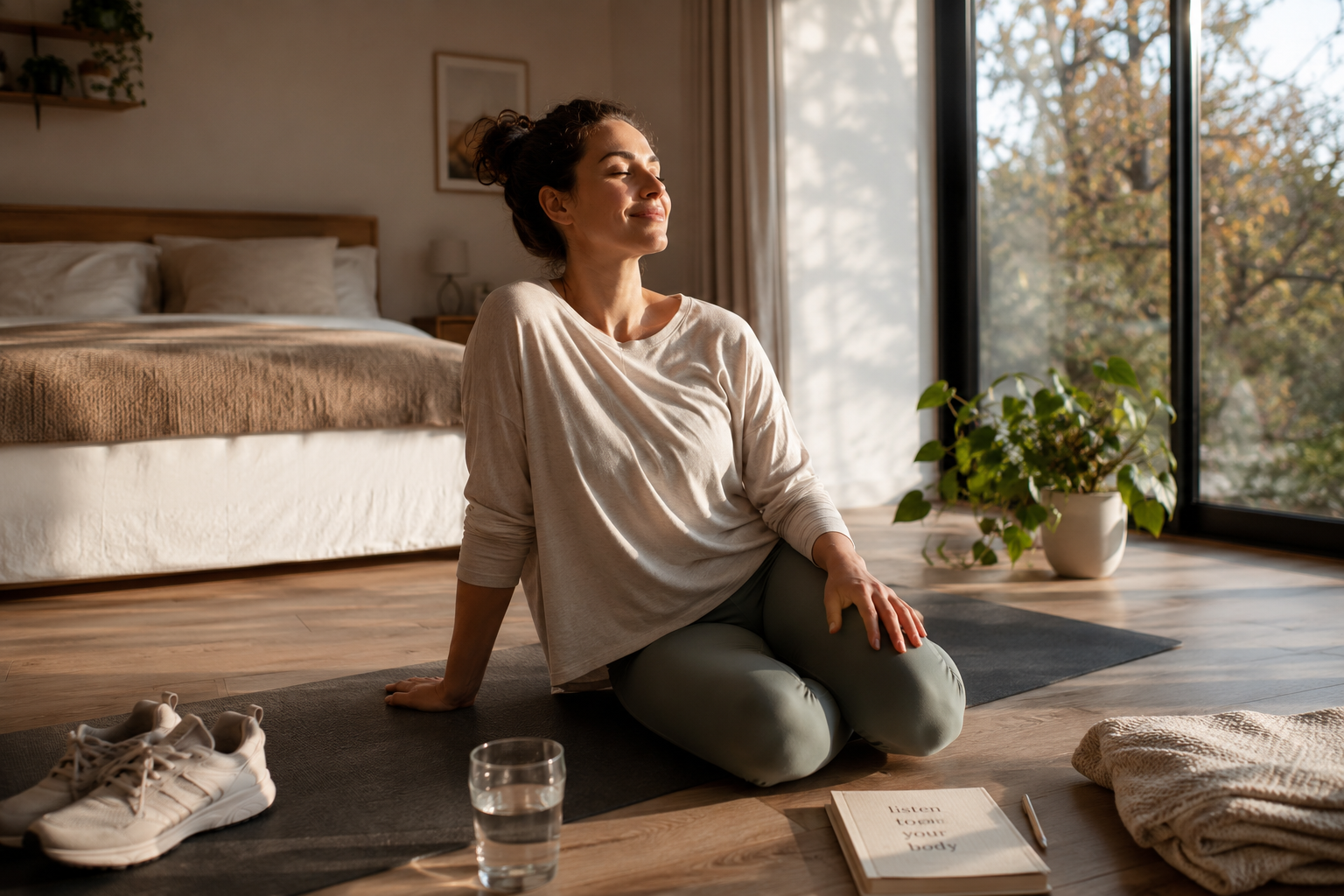
Key Takeaways
Physical rest is active recovery, not merely inactivity. Rest includes restorative sleep, hydration, nutrition, gentle movement, breath, touch, and practices that help the nervous system feel safe again.
Single life can offer greater ownership of physical wellbeing. A single person can shape their sleep environment, movement, meals, health decisions, and recovery schedule around what their body genuinely needs.
The body needs seasonal rhythms of movement and recovery. Sunlight, walking, stretching, swimming, restorative movement, nourishing food, and deeper winter rest help the body recover without turning care into another performance.
Listening to the body is an act of compassion. Fatigue, pain, poor sleep, and low motivation are signals to honor rather than override; consistent rest days create the conditions in which healing can occur.
You know your body well. Or you used to, before everything got so busy. You understand the difference between the satisfying ache of a good workout and the dull, persistent tension of a body that's been carrying stress for too long. You know what it feels like when your body is operating well — the energy, the coordination, the sense of physical aliveness — and you know what it feels like when it isn't.
The physical rest profile describes people whose relationship to their body is central to their sense of wellbeing. This might mean you exercise regularly and have noticed the toll that overtraining or chronic stress is taking. It might mean you do physically demanding work and the body-at-rest is something you genuinely crave. It might mean you're someone who finds that their emotional and mental states are closely tracked by what's happening physically — that when the body is right, most things are right, and when the body is suffering, everything else follows.
Physical rest is not simply lying down more, though lying down more is often a good start. It encompasses the full range of recovery — adequate sleep with genuine restorative architecture, the active recovery practices that help the nervous system downshift, the nutrition and hydration that the depleted body needs, the touch and movement and breath that communicate safety to a system that may have been running in emergency mode for a long time.
For the single person, physical rest carries a particular quality of self-ownership. Your body is your territory, managed on your own terms, rested on your own schedule, cared for according to your own priorities and judgment. There is a kind of radical self-responsibility in that — and a kind of radical freedom.
The Singular Advantage: Physical Rest While Single
Physical rest when you're single is uncomplicated in ways that deserve acknowledgment. No one else's sleep schedule disrupts yours. No one else's energy level sets the pace of the weekend. No one else's workout preferences, dietary needs, physical anxieties, or body-image issues enter the room uninvited.
You sleep alone, which means you control your sleep environment completely: the temperature, the darkness, the noise level, the mattress firmness, the time you go to bed and the time you wake. Sleep researchers are nearly universal in their assessment that sleep environment is one of the most controllable contributors to sleep quality — and single people have complete control over it.
You choose your movement practices entirely according to what your body actually needs, not what fits a shared schedule or a partner's preferences. You eat what serves your body without negotiation. You rest when you need to rest, for as long as you need to, without guilt or social friction.
Additional benefits worth naming:
You develop an unmediated relationship with your own body. Without a partner's gaze or opinion in the picture, you develop a relationship with your physical self that is between you and your body alone — more honest, more nuanced, and often more compassionate than what emerges in the context of romantic scrutiny.
Your health decisions are made with complete autonomy. Sleep schedule, diet, exercise intensity, medical care, supplements, rest days — every decision about your physical wellbeing is made by you, for you, without requiring buy-in from anyone else.
Recovery time is protected. When you're ill, injured, or simply depleted, you don't have to manage a partner's needs while you recover. You can give your body the full, undivided attention that genuine physical recovery requires.
Spring: Waking the Body and Building Restorative Habits
Spring is the body's natural season of reawakening — the time when longer days, warmer temperatures, and fresh air invite a gentle return to physical aliveness after winter's comparative dormancy.
Start a morning sunlight practice. Neuroscientist Andrew Huberman's research on circadian biology has popularized a practice that is as simple as it is evidence-backed: go outside within thirty to sixty minutes of waking and expose your eyes to natural light for ten to thirty minutes. This single habit, done consistently, anchors the circadian rhythm, improves sleep quality, boosts morning cortisol at the right time (which helps it stay low at night), and significantly improves mood and energy across the day. For single people, this is easier than it sounds — there's no household choreography to navigate before you walk out the door.
Begin a gentle stretching or mobility practice. Spring is the right season to start a body-based practice that emphasizes recovery rather than performance — morning stretching, foam rolling, or a dedicated mobility routine. The goal is not fitness in the conventional sense. It is to begin listening to the body's signals, releasing stored tension, and building the body-awareness that is the foundation of genuine physical rest.
Take a solo walk every day, even a short one. Walking is among the most thoroughly studied health behaviors in medicine, with evidence supporting its benefits for cardiovascular health, mental health, immune function, sleep quality, metabolic regulation, and longevity. A twenty-minute walk in nature, alone, without headphones, is one of the most restorative physical practices available. Spring makes this especially easy — the weather, the blossoms, the birdsong. Let the season draw you out.
Assess your sleep environment. Spring is an ideal time to audit and improve your sleeping space. Blackout curtains, a white noise machine, a cooler thermostat setting (sleep research consistently identifies 65-68°F as optimal for most people), a mattress or pillow that genuinely works for your body. As a single person, you can make all these changes without a single conversation. Take advantage of that and invest in your sleep architecture.
Summer: Embodiment, Pleasure, and Recovery Through Joy
Summer is the season of the body in its full, sensory richness — warmth, water, movement, and the permission to simply enjoy physical existence. For the burnout-prone physical rester, summer is the season to rediscover pleasure as recovery.
Swim. Whether in the ocean, a lake, a river, or a public pool, swimming combines the restorative properties of water immersion (which the vagus nerve responds to powerfully) with full-body, low-impact movement. Cold water swimming in particular has generated significant scientific interest for its effects on the autonomic nervous system, with evidence suggesting it reduces inflammation, improves mood, and trains the parasympathetic recovery response. Start with comfortable temperatures and work your way toward the bracing kind.
Design your own recovery week. Choose one week in summer to deliberately undertake a physical recovery program — no intense training, no strenuous weekend plans. Instead: daily walking, gentle stretching, early bedtimes, nutritious food prepared with care, and a genuine commitment to letting the body restore. Athletes call this "deload week." The rest of us can call it medicine. As a single person, you need no one's agreement to do this. You simply decide.
Spend time outdoors without an agenda. Lie in the grass and look at clouds. Sit by water and do nothing. Walk barefoot on earth or sand. These are not trivial activities. Grounding research — while still emerging — suggests that physical contact with the earth has measurable effects on inflammation and electrical balance in the body. But beyond science, the experience of being in the natural world with no goal and no device is one of the most bodily restorative activities available to the modern human.
Create a summer body-care ritual. Massage (self or professional), long baths with Epsom salts (magnesium absorption through the skin), body movement purely for pleasure (dancing alone in your kitchen, a slow morning stretch with good music). The body that is cared for with attention and pleasure communicates safety to the nervous system — the opposite of the alarm state that chronic stress maintains. Summer is the season to practice this.
Autumn: Deep Rest, Body Wisdom, and Slowing Down
Autumn invites the body toward a slower, more inward rhythm — the physiological parallel to the natural world's gradual release. For the physical rester, this is the season to honor the body's need for genuine recovery after the activity of spring and summer.
Prioritize sleep with renewed intention. As the days shorten and the light changes, the body's melatonin production naturally increases earlier in the evening. Working with this rather than against it — going to bed earlier, dimming lights after sunset, limiting blue light exposure in the evenings — allows you to access deeper, more restorative sleep cycles than you might manage in summer. Autumn is the season to get serious about sleep, and as a single person, you have complete control over the conditions.
Introduce restorative movement practices. Yin yoga, qi gong, tai chi, and slow, mindful walking are autumn's ideal movement forms. These practices work with the parasympathetic nervous system rather than the sympathetic, actively facilitating recovery rather than adding more physical load. The specific quality of autumn light and air makes outdoor slow movement particularly restorative.
Get a professional massage. For single people, touch is often significantly reduced — not from loneliness necessarily, but from the practical reality that partnered people receive far more casual, everyday physical contact. The body needs touch. Research by Tiffany Field at the Touch Research Institute has documented massage's effects on cortisol reduction, immune enhancement, and nervous system regulation. Scheduling a regular massage — monthly, or more frequently during periods of high stress — is an investment in physical rest that single people are particularly well-positioned to prioritize.
Nourish the body with seasonal food. Autumn's harvest offers some of nature's most nutrient-dense foods — squash, root vegetables, apples, dark leafy greens, nuts, warming spices. Cooking for yourself with genuine care — not just grabbing whatever's convenient — is an act of physical selfcare that also engages the creative and sensory faculties. As a single person cooking for one, you can follow your own nutritional instincts with complete freedom: the meal that serves your body perfectly, made on your timeline, eaten at your pace.
Winter: The Body's Season of Genuine Rest
Winter is the season that most directly mirrors the body's deep rest needs. The animal body, following natural light cycles, genuinely wants to slow down, sleep more, eat warming foods, and reduce its activity load. Modern life rarely allows this, but the single person has more capacity than most to honor winter's invitation.
Sleep longer. Give yourself permission to sleep eight to nine hours in winter, or even more if your body asks for it. Seasonal Affective Disorder (SAD) affects a significant portion of the population and involves genuine neurological changes, not just a bad mood. Prioritizing sleep, using a SAD lamp in the mornings, and engaging in regular outdoor light exposure even in cold weather are evidence-based responses.
Create a full-body wind-down ritual. An hour before bed: dim the lights, put the phone away, take a warm bath or shower (the subsequent body temperature drop signals the brain toward sleep), do ten minutes of gentle stretching, engage in something that brings genuine calm — reading, quiet music, a warm drink without caffeine. Do this nightly, consistently. Consistency is what converts the ritual into a neurological cue for sleep.
Try contrast therapy. The alternation of heat (sauna, hot bath) and cold (cold shower, cold plunge, outdoor cold exposure) has a long evidence base in recovery medicine. It trains the body's vascular and nervous systems, improves sleep quality, reduces inflammation, and produces a profound sense of physical wellbeing. You don't need a spa or a fancy facility. A hot shower followed by thirty to sixty seconds of cold water is enough to begin.
Rest without guilt. The particular gift of winter for the physical rest profile is permission — granted by the season itself — to genuinely stop. To cancel the intense Saturday workout and take a walk instead. To sleep past your usual time on a Sunday. To spend an afternoon horizontal with a blanket and a book and no expectation of productive physical output. The body is not a machine. It has seasons too. Let it have winter.
Building Your Physical Rest Practice
Listen before you prescribe. The body communicates what it needs — persistent fatigue, low motivation, frequent illness, poor sleep, and aching joints are all signals worth attending to, not overriding with more effort. Develop the practice of checking in with your body before you decide what to do with it.
Rest days are not optional. In training science, recovery is when adaptation happens. Continuous load without rest produces diminishing returns and, eventually, injury. This applies not just to athletes but to anyone carrying the physical load of a demanding life. Build rest days into your week as non-negotiable, and treat them as the serious physiological intervention they are.
Physical touch matters. As a single person, actively cultivate forms of appropriate physical touch: professional massage, regular physical activity with others (group fitness classes, contact sports), physical affection with friends, time with animals. The body that receives no touch is a body under a specific form of deprivation, and that deprivation has measurable physiological consequences.
A Final Word
Your body has been faithful to you through everything it's been asked to carry. The stress, the demands, the pace, the compromised sleep, the skipped rest days. It is still here, still trying, still doing the remarkable work of keeping you alive and functioning.
As a single person, the relationship you have with your body is in many ways the most primary, most honest, most enduring relationship in your life. It will be there before and after every partnership. It carries the full history of your experience. It deserves the same care, attention, and genuine rest you'd offer anything or anyone you love.
Start with one thing, tonight. Sleep a little longer. Walk a little slower. Lie down in the middle of the afternoon and let yourself be still.
The body knows how to heal. Give it the conditions and get out of the way.
